At 28, She Wants To Cut MRI Scan Time To A Coffee Break – Meet Mary-Brenda Akoda, Nigeria Prize For Science Winner
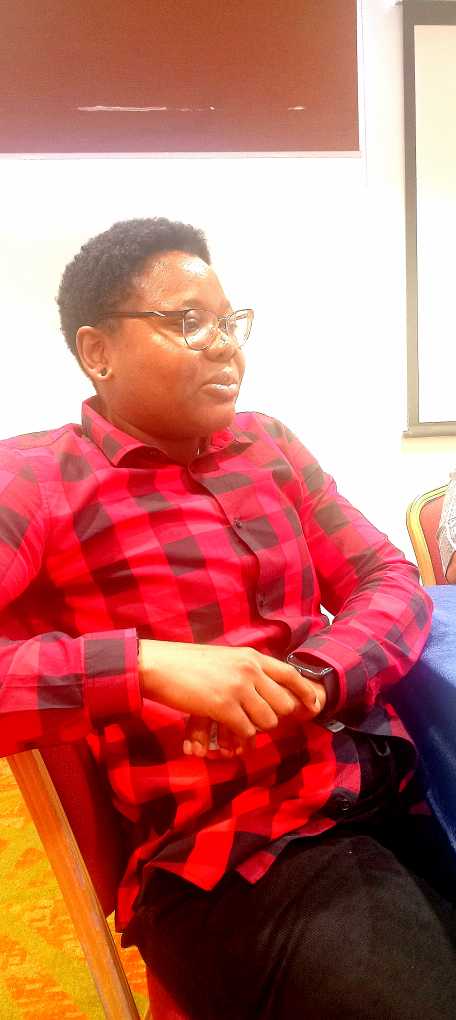
At 28, Nigerian AI research scientist and software engineer Mary-Brenda Akoda is working to make MRI diagnosis faster, more accessible and more efficient, and her effort has now earned her national recognition.

Akoda developed GenScan AI, a technology designed to accelerate MRI examinations and help hospitals and diagnostic centres serve more patients with the scanners they already have. The innovation won her the 2026 Nigeria Prize for Science and Innovation, an award that celebrates technological solutions with the potential to address major development challenges.
Her interest in medical AI, however, goes beyond technical ambition. It is rooted in personal experience with delayed diagnosis, including the loss of an elderly loved one after a stroke, an experience that drew her attention to a problem affecting health systems worldwide, where patients who need advanced diagnostic care face long waits, limited access and delays that can affect outcomes.
She chose to focus on MRI because while the imaging technique offers highly detailed diagnosis without the use of ionizing radiation like CT scans, it requires patients to remain completely still for extended periods to prevent movement from degrading image quality. Poor quality scans often have to be repeated, while children who cannot remain still sometimes require sedation. Akoda believes artificial intelligence can help shorten acquisition times and allow existing scanners to do more. Her target is ambitious. Within five years, she hopes an MRI examination could be completed in roughly the time it takes to make a cup of coffee or tea. That outcome is yet to be demonstrated in clinical practice, but if validated safely, faster scanning could improve patient flow, reduce waiting times, limit repeat examinations and reduce the need for sedation in appropriate cases.
Akoda said the idea for GenScan emerged around October 2024, before the company was incorporated in January 2026. Her work in medical AI began earlier with research on AI-assisted detection of diabetic retinopathy, carried out in collaboration with ophthalmologists at the University of Calabar Teaching Hospital. That research helped connect her with the chief medical director of Asiuko Diagnostic Center, whom she approached about piloting GenScan AI, a partnership she described as a natural extension of an existing professional relationship and an opportunity to test the technology in a real clinical setting. She is now working with clinical partners on the broader validation required for regulatory submissions, while also seeking international health and innovation funding to support testing, regulatory preparation and deployment. Those steps will be critical, because GenScan’s impact will depend not only on whether it can accelerate scans, but also on whether it maintains diagnostic quality, integrates with existing MRI systems and meets regulatory and clinical standards.
Akoda said she applied for the science prize after her mother, a professor who runs an organization called Young Rights and regularly identifies opportunities for young people, shared the competition announcement with her. The prize’s focus on artificial intelligence, information and communications technology and digital technologies closely matched her background as an AI research scientist and software engineer. She believed she had a chance of winning but knew the outcome was uncertain, and the award has since brought GenScan to a wider audience and intensified conversation about the role Nigerian scientists can play in building healthcare technologies for local and international use.
Outside artificial intelligence and software development, Akoda is deeply involved in mixed martial arts, a discipline she says she would have pursued as a professional career alongside science. She is also keen to correct comparisons between GenScan and ChatGPT or other general-purpose AI systems, stressing that GenScan is not designed for open-ended conversation but for a specific medical imaging task to support MRI acquisition and operational efficiency. Its value, she notes, will ultimately be measured by evidence, including validated clinical performance, reliable integration with imaging systems and compliance with applicable regulatory requirements.
Her clearest message, however, is that Nigeria should be among the first countries to benefit from GenScan. She wants Nigeria to be a priority rather than an afterthought, starting with a limited number of clinical sites, assessing performance under real-world conditions and expanding adoption if the results support it. If successful, the technology could help hospitals scan more patients, reduce waiting times, limit repeat examinations, lower reliance on sedation where faster imaging can help, and create room for more affordable MRI services. Those gains remain to be established through clinical validation and deployment, but for Akoda, the prize is not the finish line. It is a launch point for moving GenScan from research into clinical practice and testing whether faster, more accessible MRI diagnosis can become a reality, starting from home.